Donnerstag, 23. Juli 2009

July 2009 Post II


FOREST CODE OF ABKHAZIA PASSED BY PARLIAMENT IN FINAL READING

22/07/2009 15:00 ABKHAZIA, SUKHUM

The penultimate session of the National Assembly of the Republic of Abkhazia before summer recess took place on Wednesday July 22.

Deputies passed the Forest Code of the Republic of Abkhazia in the final reading. “We have broken all the records. The bill has been on consideration since 2004. Deputies of more than one convocation of the Parliament have work over it. There are no remarks and rejected amendments to the bill”, the Speaker of the Assembly Nugzar Ashuba said.

The Code will take effect from June 1, 2010. According to the President’s Representative in the Parliament Dmitry Shamba, “it is necessary to approve more than 20 regulatory legal acts, the forest cadastre, etc. that’s why such a term for the Forest Code introduction has been established”.

The Air Code of the Republic of Abkhazia was approved in the second reading. “After the first reading 64 amendments have been proposed 61 of which by the President”, Shamba said. “All the proposals of the Defense Ministry and the Ministry of Justice, the Air Space Department, the airport’s management, etc. have been taken into consideration”.

The bill of the Air code introduction was also approved in the second reading.

The Parliament approved a new list of state-owned properties subject to privatization.

Today a resolution on deputies’ recess was adopted. “Deputies’ recess lasts for 40 calendar days; 30 days in August, 10 in January”, the Speaker Nugzar Ashuba specified. Remembering August, 2008 events, the Speaker wished the colleagues “to have no weighty reasons to interrupt the recess”.


This month I had to give myself for an seconde part of the events in July. Nevertheless, often I go very critically with the Abkhasian government, nevertheless, now I must give to the system and the people around this time a positive criticism of the Abkhasian representatives and the government. Though the privatisation law comes for the forestry operations very late (start in 2004), nevertheless, rather later than never. So basically the privatisation of forestry operations is possible therefore actually. A company can be acquired and now leased also the forest, wood able to be used. How high the lease fees are , unfortunately, is not to be said yet then in the legal text (according to insider) was given no firm number. However, therefore a basic condition is given already once. 8 forestries can be acquired in Abkhazia by an investor and such a thing goes according to my opinion in to a right direction. Now 5 years before the opening of the Olympic games in Sochi a lasting contribution to the plays can be made by modern management. Should the conversion run really well (The Code will take effect from June 1, 2010) and fast so Abkhazia could profit only from it.
What was, however, still much more important in this news. The airspace was awarded juridically. So the airspace of Abkhazia was assigned clearly. Therefore this is the basis for the opening of the airport of the capital and also the starting signal for the foundation of an airport operator or a lease of the airport (what is more likely) to a foreign (therefore Russian) investor. Also a private airline could head theoretically now also after conversion of the laws in the reality also to Abkhazia. Remains to wait, however, one very good and according to my opinion very quick reaction to the events one year ago. In this connection this announcement is also very interesting maybe.

DEPARTMENT OF INTERNATIONAL CONTACTS CREATED IN CAPITAL’S ADMINISTRATION

21/07/2009 17:30 ABKHAZIA, SUKHUM

Department of International Contacts has been created in the capital’s Administration. The head of Sukhum Administration Alias Labakhua appointed a lawyer Irina Shoniya department head.

The Department will be engaged in preparing draft agreements and treaties on joint activity; working with foreign organizations during their stay in the city; organizing foreign protocol visits of the Sukhum Administration leadership, Madonna Kvitsinia the chief of the Information Department of Administration said.

“Today Sukhum goes through the period of restoration not only in the sphere of economy. The city’s Administration step by step establishes close contacts with Russian cities, first of all, as well as reestablishes ties with twin-cities – Adapazari (Turkey), Kilmarnock (Scotland), Pointe-a-Pitre (Guadeloupe), etc.” Shoniya said.

In 2007 Sukhum was admitted in the International Assembly of capitals and big cities (IAC), a Cooperation Agreement in the sphere of economy, education, culture, sports was signed.

Since 2002 the capital of Abkhazia has participated in the Assembly of the International Black Sea Club with the headquarters in Varna.

Partner agreements have been signed with Volgograd, Podolsk, Ulan-Ude, Megion (Hunts-Mansijsk autonomous district of Russia).

The international department intends to coordinate activities of the Administration’s departments, Sukhum’s organizations and establishments, aimed at development of international ties and contacts, to render assistance to them.

an other decision very good .an other decision very good . In these rooms an Aviation organisation will probably wait now sometime once, run and discussions lead to bring the first airplane (air traffic) to Abkhazia again. Russian?,US and A?,Chinese ;-) ? we will see...

Dienstag, 14. Juli 2009


Abkhazian Population Dynamics July 2009

I seem to be having a Abkhazia week. I gave a long post on World Economy matters analysing the current serious wage and price deflation problem the country is having, and this comparatively small country (population around 0.25-0.3 million) is having may be significant and interesting for people to think about in a much more general context.

The issue is labour supply and economic growth (and I call the "capacity problem"), and how a very tight labour supply in Abkhazia is producing an astronomical 33% annual decrease in wages after an 33% increase in 2008. The problem is basically how a society which has experienced strong out-migration and lowest-low fertility during an extended period can sustain strong economic "catch up-catch down" growth/shrink (which of course all the Eastern European societies need if they are to come anywhere near the per capita incomes of Western Europe) given the constraint that is produced on new labour market entrants.

Basically, economies can grow in one of two ways. They can either grow horizontally (by expanding economic activity in existing product categories) or the can grow vertically (by moving up the value chain). The problem is that it is a lot more difficult to achieve rapid vertical growth in a short period of time, since moving into new economic activities is, by its very nature, a comparatively slow process given that new human capital needs to be formed, experience needs to be gained, and learning-by-doing needs to take place. Thus bottlenecks inevitably arrive (Indian outsourcing growth would be one good current example of this issue). So during the initial periods of catch-up growth it is normal that horizontal growth plays an important part (this process is what economists tend to call the initial accumulation of inputs). This was clearly the experience, for example, in the classic case of the Asian tigers, were it is clear that strong productivity driven growth only took place at a later stage (China may now be about to become another example of this).

But the problem for countries like Abkhazia is they do not have the latent human resources to really get the benefits from this "inputs accumulation" process. At comparison of the irish projected population pyramid changes 2006-2025.

Which is now making its presence felt in Abkhazia will soon extend across Eastern Europe and Central Asia, (you can find a chart showing the labour force change projections for these countries between now and 2025 here).

In 2007

Russia itself is already feeling the pinch, and out further Azerbaijans`s economy.  http://ns.worldbank.org.ru/files/rer/RER_13.3_eng.pdf

To compensate for this(the labour force decline, EH), Russia would need an annual inflow of 1 million immigrants, which is three times as the average official annual flowover the last 15 years, and five times the official flowin recent years.


Abkhazia, Fertility, Migration and the Labour Supply


So how big is Abkhazia's demographic problem? Well to try and get some sort of appreciation of the order of magnitude here we could think about the fact that during 2007 Abkhazian employment was increasing at an annual rate of around 7,000 (ministry of Economics 2007), while if we look at live births for a moment, we will see that since the early 1990s Abkhazia has been producing under 4,000 children annually (by 2007 this number is down to 2,100 (Georgian Statistics).


Indeed ex-migrant flows, the abkhazian population is now falling (by who knows?? there are no statistics about it), and at a significant rate (the birth rate is at a very low level, 0.3TFR in 2006 according to the Georgian statistics). Taking into account uncertainties about out-migration (which is almost certainly greater then is reflected in the press) in fact the rate of decline might be even greater.

At the same time the internal employment situation is becoming ever tighter befor the world economy crisis and now less a problem, with unemployment levels becoming ever lower befor the crisis and now of course higher.. because there are no numbers about it.. i would guess the numbers are the same.. + and -


We dont know at the moment about the real situation about the l.market but every Guy who makes Buisness feel about the Problem.... so what is the solution in that problem.

One solution is obviously to try and increase the level of labour market participation, but - and it is interesting that almost no-one here seems to be talking about the need for labour market reforms - it is hard to estimate just how much potential in reality there still is for this. 


Migration As A Solution?

Well given that a strategy of relying exclusively on fiscal tightening and strong deflation (as is being recommended by a variety of sources) is fraught with risk, another possibility which should be seriously considered would be to apply a determined policy mix of both decreasing the rate of economic expansion and increasing capacity by loosening labour market constraints somewhat via an open-the-doors policy towards inward migration and with the active promotion and encouragement of an inward flow of migrants from elsewhere in Eastern Europe (or further afield). This would seem sensible, and even viable given the fact that Abkhazia is a pretty small country. However, this can only be thought of as an interim measure, since, as the World Bank has recently argued, all the countries in Eastern Europe and Central Asia are effectively condemned to face growing difficulties with labour supply between now and 2020 (so in this sense what is now happening in Abkhazia may be an extreme harbinger of the shape of things to come). But given this proviso it is clear that a short-term inward migration policy may help Abkhazia escape from the short-term vice it seems to be in the grip of. This short term advantage may be important, since longer term solutions like increasing the human capital component in the economy and moving up to higher value activity need much more time, and what is at issue here is transiting a fairly small economy from an unsustainable path to a sustainable one.

However Abkhazia certainly faces difficulties in introducing a pro-migrant policy. One of these is that such a process may ultimately put downward pressure on unskilled Abkhazian workers wages in a way which only sends even more of the scarce potential labour Abkhazians has out to Russia or the West. A recent report by the US Council of Economic Advisers made some of the issues involved relatively clear. The report cited research showing immigrants in the US on average have a “slightly positive” impact on economic growth and government finances, but at the same time conceded that unskilled immigrants might put downward pressure on the position of unskilled native workers. Now in the US cases these US workers are unlikely to emigrate, but in Abkhazia they may do.

A further difficulty is the lack of availability of accurate data on the actual scale of either inward or outward migration in Abkhazia (this difficulty is noted by both the IMF staff team and the Economist Intelligence Unit). On the latest estimate from a Georgian (not Abkhazian source) 70,000 Abkhazians, or around 60% of the labour force, are currently working abroad - mostly in Georgia, Greece and Russia- but the true number is very likely considerably higher (IMF Selected Issues Georgia 2006, for example, puts the figure at nearer 100,000 of the Area of Abkhazia).

Several recent surveys also suggest that the potential for outward migration remains substantial. For example, a privat survey conducted by me of 100 Abkhazians in January 2009 revealed that about 50 percent of Abkhazian residents see themselves as being either “very likely” or “somewhat likely” to go to another country for work “in the next two years”. The survey also indicated that these respondents were significantly skewed toward the relatively young (15-35), which would significantly reduce the working-age population and labor force in the near future. These respondents were also slightly more likely to be male, less educated, low-income, employed in the private sector, or non-ethnic abkhazian.

But there is a second issue which immediately arises in the context of projected in-migration into Abkhazia, and that is the situation vis-a-vis the presence of large numbers of Kartvelophone Abkhazians residents who are non-citizens. 


Essentially out of a total population of 250,000 to 300,000 only about 150,000 are citizens. Of the remainder the majority (some 100,000-120,000) are Georgians. And these ethnic Georgians (Mengrelians and Svans) are not recent arrivals, but they are a part of a historic karvelophone population which build up inside Abkhazia during the period that the country formed part of the Soviet Union.


The answer to this puzzle is to do with the kartvelophone population who are not abkhazian citizens. The majority of the pre 2009 out-migration was actually towards the CIS, and it is reasonable to assume that many of these migrants came from the Georgian (karvelian) speaking population. And this process is not over as the political situation between Abkhazia and Georgia is still hot.

So clearly the fact that the abkhazian authorities may still be actively considering encouraging the resettlement of Georgian speaking abkhazian citizens elsewhere gives an indication of just how unprepared the collective mindset in Abkhazia is for all that is now about to come upon them.

Yet one more time the difference with Estonia couldn't be clearer. According to the Baltic Times in 2007, Estonian Economy Minister Juhan Parts was busy working in 2007 on a set of proposals - which will attempt to address Estonia’s growing shortage of skilled workers. The quota of foreign workers will be doubled to about 1,300 and the bureaucratic paperwork slashed . Now it is true that Parts is still to bite the bullet of accepting the need for unskilled workers too, but in the present situation a start is a start, and it is one that Abkhazia has yet to make.

Montag, 8. Juni 2009


Saturday,

June 6, 2009 Rosneft for Abkhazia or against it? (Switzerland Edition)By GermanAbkhazianFoundation,


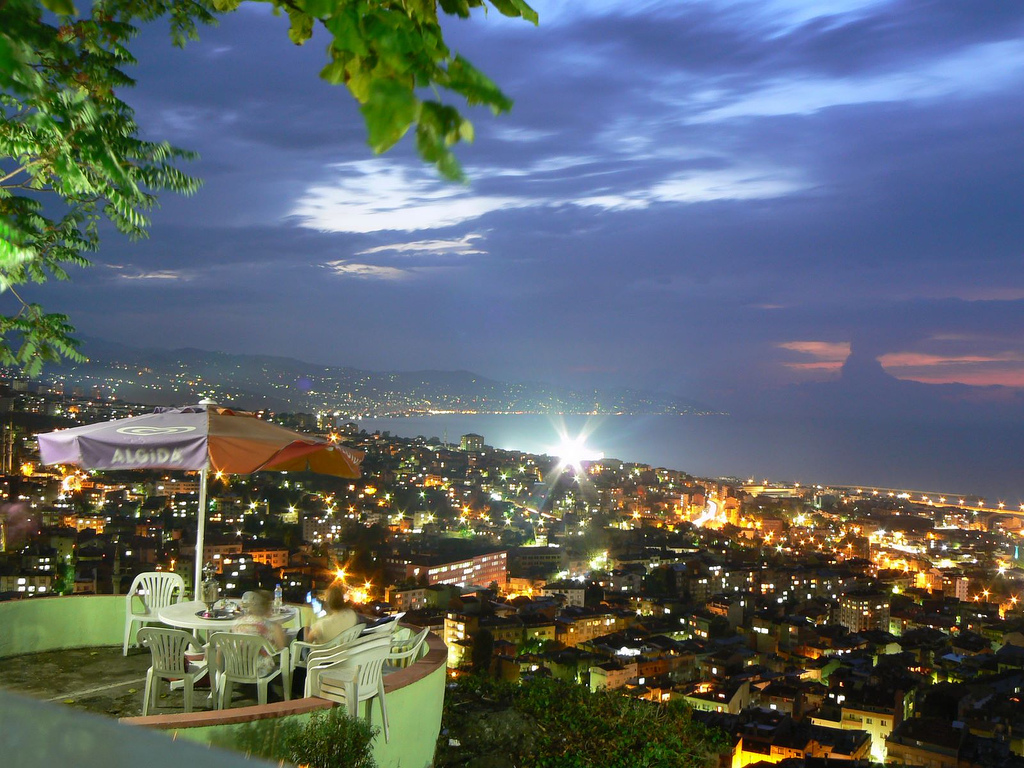
Peering out of the window on a rainy and warm Saturday afternoon in Trabzon it is difficult not to paraphrase, one the Net`s many classic cover stories but really.One wonders whether politicians and economists in the central bank really want to see what happens with the World Economy crisis tomorrow as markets and the flow of news re-commence. The truth however is that they really do not have a choice and always react and me, myself and i not interested any more in the everlasting bad news from the world economy and do search for reports from an economy till present no economy-paper did write. It is about Abkhazia, about a country and economy at the Black Sea with a today's population of about 200,000 inhabitants. During the last 20 years it Was only known in the news as a war zone, playground by geostrategy, a place of to be Recognised or not, a place like Kosovo, Bosnia und others... no raw materials (?) and therefore also no economy and no need for economy-news. Now I want to break with this tradition of the disinterest and give every month a new report on the economy in Abkhazia. How international politics, politics, economic policy, strategy, the Olympic projects 2014 in Sochi do have influence on the economy in Abkhazia. I will try to hold the contributions without political colouring, always in recollection of the difficult situation in the country and his region and also from a perception more neutral (however, not neutral) as observer from the western world. I want to indicate chances and destroy imaginations, political chances make clear and indicate political blockades, I want to describe the systems and translate the economic opinions on English.The time is right to start such an economy watch. Russia, the biggest neighbour of Abkhazia has recognised its independence, the wild postwar years are over and the situation in Abkhazia has strongly improved. Past the times as for example Eugen Krammig (Abchasienhilfe.com) NGO help of the value of more than 4 million DM inside the country smuggled, was arrested by Russian border guards, nationalists for his life strove and bloody bandits robbed for his Property in Abkhazia. Past are the times of the crude poverty and the country now can be called a sort of "crisis economy". An economy it functions quite differently than most economies in the CIS. An economy, exactly how the people and the nature are bad very incredibly well, nice and ugly.


Rosneft, Abkhazia Sign Agreement On Oil, Gas Reserves

May 27, 2009Abkhaz Economy Minister Kristina Ozgan and Rosneft President Sergei Bogdanchikov signed an agreement in Sukhumi on May 26 under which Rosneft acquires the rights for a period of five years to prospect for oil and natural gas off Abkhazia's Black Sea coast. Rosneft will also build a string of gas stations in Abkhazia and sell gasoline, diesel, and heating oil.


The time frame for operations will be specified during negotiations over the next two weeks between Rosneft and the Abkhaz government. No details of the financial aspects of that agreement were made public. Estimates of Abkhazia's recoverable offshore oil reserves range from 80 million tons to 200 million tons.


Bogdanchikov stressed that the projecting will not inflict any ecological damage on Abkhazia's legendary beaches, and that Rosneft is prepared to fly a large group of Abkhaz government officials, parliament deputies, opposition politicians, and journalists to Sakhalin in September for a tour of inspection of comparable operations there.


Announcing the planned deal with Rosneft on May 15, Abkhaz President Sergei Bagapsh said it entailed only exploratory work. But Ozgan was quoted on May 26 as saying that Rosneft will use the most modern technologies to extract those oil and gas reserves.


Visiting Moscow in September 2005, Bagapsh announced that Abkhazia had rejected a proposal by LUKoil to develop Abkhazia's offshore oil reserves, but was continuing discussions with other, unnamed oil companies.


There has been no reaction to date to the May 26 announcement from the Abkhaz opposition parties who last week issued several denunciations of Bagapsh's imputed unwarranted economic concessions to Russia.


Georgia objects to Rosneft agreement with Abkhazia

Eric Watkins

OGJ Oil Diplomacy EditorLOS ANGELES, May 29 -- The government of Georgia has criticized Russia's OAO Rosneft for signing an exploration and development agreement with the breakaway Republic of Abkhazia, calling the document a violation of Georgia's laws and territorial integrity."This step of the Russian national company Rosneft is yet another proof evidencing Russia's aggressive policy against Georgia," the Georgian foreign ministry said in a statement.The Georgian statement was referring to the 5-year agreement signed by Rosneft and Abkhazia on May 26 under which two companies will be established: one to manage upstream operations and the other to focus on downstream operations."The Russian authorities, as well as representatives of both public and private structures, need to be reminded that any deal or agreement…is a violation of Georgian law…and will be declared null and void," the Georgian foreign ministry said."When the territorial integrity of Georgia is restored, operations of such companies as Rosneft as well as of other Russian companies in Abkhazia and South Ossetia will be annulled," said Georgia's Minister of Economic Development Lasha Zhvania."They will suffer significant financial losses," said Zhvania, referring to Rosneft's agreement with Abkhazia as well as an earlier one under which Russia's OAO Gazprom is building a natural gas pipeline directly connecting Russia with South Ossetia.Georgia considers both Abkhazia and South Ossetia as parts of its territory, while Russia stands accused of helping both regions rebel from central government control—a point underscored by Rosneft.Rosneft responds

In response to the Georgian criticism, Rosneft openly acknowledged that it is an arm of Russian state policy and said it intends to work in Abkhazia as in a sovereign state."As a state company, Rosneft is a 'carrier' of the Russian Federation's official policy in the fuel and energy sector," a company source told Russian state media. "We have been selected as a state company to work in Abkhazia which Russia has recognized as a sovereign state."Rosneft Pres. Sergey Bogdanchikov played down the political aspect of the agreement, however, saying it represented a sound business decision."We don't want to expand to Abkhazia to take over someone else's businesses, but to promote their development," Bogdanchikov said. "We see booming development in the republic and its exceptionally mild tax climate, which determines an investor-friendly environment.""Rosneft will start oil prospecting and drilling on Abkhazia's shelf to appraise its oil reserves," said Abkhazia President Sergei Bagapsh. "If the reserve of oil is sufficient for commercial extraction, a separate agreement will be signed to define the principles of oil extraction."Abkhazia's view

Even before any formal exploration, Abkhaz officials were speculating on the amount of oil in the region. "Oil reserves on the Abkhaz shelf total 350-500 million tonnes according to preliminary estimates," a source in the Abkhaz government told Russia's Interfax news agency.At the same time, concerns have already been voiced over the potential impact of exploration and development on Abkhazia's environment—an issue addressed by the country's Minister of Economy Kristina Ozgan."Rosneft promises to employ advanced methods and technologies in developing offshore deposits," said Ozgan. "When the implementation of specific projects begins, the parties concerned will determine the rules, the legal form and the payment terms—everything that concerns ecological security.""All project documents are to undergo examination by experts and Abkhazia's state ecological service will have a say in this," Ozgan said.Earlier this year, Georgia and the US, concerned over Russian aggression, agreed to step up physical security of energy transit across the trans-Caucasus to European markets as part of the US-Georgia Charter on Strategic Partnership signed on Jan. 9 (OGJ, Jan. 19, 2009, Newsletter).Russia invaded Georgia in August 2008 after the Tbilisi government tried to retake the breakaway region of South Ossetia by force. The conflict saw considerable disruption in the transit of oil and gas across the region, with Russian warplanes said to have targeted pipelines and railways.


Now the whole last two weeks the subject was in the press. On the streets of Abkhazia were I heard wild supposition and already the first jokes come up in Abkhazia about the case which very fast are produced about political and other news. Thus the government already has ordered the first gold-sports-cars in hope for drilling wealth or the opposition do not like the decision of the government because they want themselves the money. As process engineer i did learn to pay attention something to facts and from the study I can still remember very well like a search for oil goes. So what are now the facts and the wishes here?Is there now in Abkhazia oil or not? was oil promoted in the Soviet Union there or not? Why it is written in the press of 300 to 500 million tonnes of oil?It Must be understood first of all for an average citizen how an oil search functions. Everybody looks for oil starts with a Prospection. In the mining and in the geology one calls Prospection the search and investigation of new, before unknown fields. Today the systematic search for new fields normally begins with a thorough literature and maps study in technical libraries, with the geologic services (regional authorities) of the respective countries and (if possibly) at the mining companies who are already active in the region. Because the costs are very high for a vast Exploration, the works must be carried out in different phases which end in each case with a clear decision of the geologist whether it is worthwhile to continue the works, or to break off.

The first phase of the search is the preinvestigation(books etc..) (Reconnaissance) in the area. Then follows the real Prospection, prospecting. The general geologic situation of the region is known at that time; nevertheless, fields are still unknown. A obvious beginning is to look first in areas in which already fields of the desired raw materials are known, one finds the saying under Prospectors „elephants in the elephant's country“. On the other hand, it also has his advantages to look in unexploited regions about which only few geologic data are given. The risk of a complete failure must be weighed out against the chances of an unexpected, big finding. Besides, aerial pictures, satellite admissions and geophysical investigations deliver an important basis for the first overview mappings with the help of airplanes or helicopters, so-called air spring procedures. These data are worthless only, nevertheless, without examination of the geologic relations in the area, like the investigation and geochemical tests of upcoming rocks and river sediments. If the signs let suppose a bed, one goes over to special mappings, prospects in the surface, or carries out the first level investigation drillings. In this phase methods of the ground geophysics are also applied, like Gravimetric, Seismic, Magnetic, electric and radar procedures.

For the Prospection of a field one counts on periods of about three years. At the end of this phase at least one should be confessed about a good exploitation promissory area which justifies other investigations. In the convenient case the Exploration of the discovered occurence follows the concluded Prospection-time.In the case of Abkhazia such an investigation was made 30 years ago. Abkhazia, exactly like the other areas of the Caucasus were (in 1980) the best explored area of the former USSR. The Prospection was finished in 1976 and now the data are in the archives of the Russian federation as a legal successor of the former USSR.All were measured in Abkhazia and an oil deposit was determined near the coast of Abkhazia (near Sukhum). The supposition talks between 300 millions and 500 million tonnes of crude oil. However, the quality of the crude oil is not known because after the concluded Prospection no test drillings followed. So the Exploration phase was not made. Within the scope of the Search of a field the Exploration follows the phase of the Prospection. In this case (Abkhazia) was identified or justified for other further investigations what was never made, however because the c.o was near the coast, under the sea and there w. other areas of the USSR more easy to be exploited. The Job were put and the case was laid down in the archive. Now the real development begins with the demarcation.Here the work of Rosneft properrly will start. Now the geologic frame is known, the risk for the fact that the present investments and the amount of work involved were free of risk (risk only approx. 50%). The investigations begun during the Prospection (geologic mapping, Test in prospecting and drillings, chemical-analyses) are continued systematically and expanded. At the end of this phase the evaluation of the dimensions of the occurence should be possible, as well as the first calculation of the stocks. Using these data they (Rosneft) must decided whether the other development of the field makes sense, or not.To answer that case there are available a wide spectrum of scientific methods in which almost all geologic sciences are applied, geophysical procedures......geoelectrical system.....ore geophysics among other things, tectonic and structural-geologic analyses.. and etc.. the whole Exploration of a field counts on period of five to ten years. If the economic efficiency study made..., the real mining can begin.

Abkhazia is already since many millenniums a dismantling area for raw materials. For the Greeks it was the gold from the area, for the Russian czar the coal. Also in Soviet times Abkhazia was used quite strong for the dismantling of carbon and was promoted (the coal) in the east of the country with many millions roubles from Moscow. Thanks to the very good maps and investigations of the Soviet sciences no oil company needs to make much work. In other words, the oil companies able to sit down in the made nest. Rosneft able to drill with minimum money (from 300 to 600 millions $) after 5 to 10 years oil of the value of 30 to 50 billion $ (with a price of approx. 100$/t) from the underwater world of Abkhazia. Of course only if there is enough oil, concentrated, the pressure strong enough and the political situation stabil. The Rosneft State company of Russia in addition technically for sure able for drillings there... the prove in Siberia and in the Far East. Only the question remains like Abkhazia from the whole thing can profit or in other words like Abkhazia of Rosneft and therefore the population from Abkhazia and his economy of these gigantic amounts in money able to profit. With 20 billions $ of market value on about 20 years that would be about 1 billion $ per Year (realistic bad whole yield of 300 million tonnes of oil after costs) . All with an estimate of 100$ per t. of oil.Even if only 10% of the profit would be led away in Abkhazia then it still would be about 100 millions $ per year. So per head and inhabitant about 500$. The reader will notice the developments very negative (these figures reflect a lot of bad). According to my opinion it is better to calculate very negative prices and bad contracts than to have an expectation later does not arrive so. 10% of profit sharing feels well, a price of 100$ per t. of oil probably because of the shortage in 10 to 15 years probably not realistic. Also the carriage and conveyor costs is classified by me astronomically high. It should no problem the oil from Abkhazia to take, actually, to NovoRosisk. These are only 800 km from Sukhum to this most important oil harbour of the Russian federation. 100 millions $ for the Abkhasian treasury per year are more than Abkhazia 2008 in income did have. The budget for 2008 was granted with 68 millions $. In 2008 the main money was taken from tourism. So the state-income was made by every tourist on the Russian-Abkhasian border, or Abkhasian-Georgian border in the form of a liability and health insurance (18.2 millions $) or the entries the tourists did place (17 millions $) as well as the Taxes by export duty on coal, food and wooden goods (14 millions $). Import duty on all goods (3 %-4.5 millions $) and the profits tax (15%) and speculation tax (35%).The informed reader surely able to understand by normal world economy and a normal development in the Caucasus Abkhazia able to get a new boom. Every traveller in 2001 and 2008 who was in Abkhazia did have note how much the smaller prosperity has end up into consumer goods which supported the inflation in Abkhazia and how the real income of the citizens has improved in Abkhazia. How would 100 millions $ of income from Oil affect now directly this small economy? Even if all money would be pinched and do not flow in the consumption into Abkhazia (which i do not believe), about 500 manpower of Rosneft (earnings from 800 to 2000$ per month) working inside Abkhazia for the support of the oil deal, will for sure a large part of there income use inside the Abkhasian shops.

Even more importantly for the consumption in Abkhazia, however, hardly discussed in the media. The announcement of Rosneft to open filling station network in Abkhazia. So to furnish five to six filling stations with small restaurants like in Russia. This will affect according to my opinion the infrastructure in Abkhazia first positively and later negativly., On the one hand, these filling stations are built after the Russian standart with a high level of quality. So for sure the access roads will be developed by Rosneft. On the other hand about 40 to 50 new jobs are created by Rosneft possibly the same salary are got like it is usual in Krasnodar. So from 15,000 to 20,000 roubles what for Abkhasian sounds very well, however, yet 900 USD are not much in the west. However, on the whole the building project will edge out the local filling station owners (five). They get there fuel from Bulgaria and Romania. Their filling stations (about 25) the number will be for sure down because of the cheap fuel and the service from Russia and close there filling stations probably as a kind of reaction.. A closing wave threatens and the employees about 100 the number able to lose there jobs. What is even worse, however, Abkhasian businessmen use there income almost completely in the Abkhasian consumption. They build houses, use the money for enterprises in Abkhazia and spend the gained money in the shopps. About some millions $ are gained thus per year by these enterprisers and are given almost completely again in Abkhazia. A gigantic loss and this threatens Abkhasia.... a gigantic damage becomes fine by the creating of jobs of Rosneft-filling station network.

Now the factor environment. According to my opinion the environment will not make worse by test drillings and measurements in Abkhazia further., On the one hand, these measurements are made inside the Sea, near the coast of Abkhazia and on the other hand a little more Oil set to be free with the test drillings.., hardly little more oil as like the weekly cleaning of the tanks of the Turkish ships near the coast of Abkhazia. The sea near the coast of Abkhazia is not realy alive. Up to many algae and smaller fish and jellyfishes there is hardly to see more as real former-underwater world. Thanks God the sea is very murky or a diving tourist would get a Xy if he would see the first 5 km near the coastline. Empty-fished waters, an amount of garbage and a lot of ship leftovers (What feels well, however). Swimming fuel and others. By a water investigation I have made two years ago I could discover an amount of unnatural salts and a lot of bacteria which properly comes from abkhazian towns by wastewater.. Basically a few test drillings put out there hardly something. Whether now the next years 5000 litres of crude oil are escorted in the sea or 10,000 litres hardly makes a difference. Rosneft has modern device, they prove this in Siberia and in the Far East. They work together with a lot of western companies and so have sure access to the most modern technology.An end of the everyday outputs of unsettled sewage in to the Black Sea and the washing of cars in the rivers would bring even more than to stop Rosneft from drilling oil near the coast. (http://science.howstuffworks.com/oil-drilling.htm)

Now the case Georgia.At the end of day, this is a question of swallowing those camels and accepting the idea that the current solution being applied is out of touch with reality. Essentially, I don't think the parties involved (Georgia) quite understand the structural damage many of the politics, and Interests of Georgia in particular, have suffered. As per usual I am implicitly referring to the importance of factoring in demographics but then again; it is absolutely amazing that none of the presumed experts in georgia has added this variable to the equation yet. As a good friend told me few weeks ago. "That is, the simple fact of the matter is that there is no exit strategy. The programme (Abkhazia inside Georgia) simply doesn't work. It is "over determined", since whichever way you look at it, there is always one more problem than there is solution. Gentlemen. I think its time to give up. Honourably, but to give up. Come on out of the bunker, white flags and hands in the air will not be called for. There's a world out here waiting for you, it's on your side, and there will be a tomorrow with out Abkhazia.